

Types Of Flooring And How To Clean Them To Achieve Great Results
A floor is the surface at the very bottom or base of a room. The function of a floor is to safely support the loads placed on it, together with its own weight. Cleaning a floor is an essential step in the overall cleaning process. Every spill, scuff, and dirty surface is a potential health and safety hazard.
FLOORING AND HEALTH AND SAFETY
The correlation between cleanliness and infection control has long been established within the home and in other settings. Dirt, germs, and the growth of bacteria can lead to sickness in and around the home found on unclean surfaces, floors, etc.
To keep infection to a minimum, it is essential that regular cleaning of such areas is carried out. Floors, in particular, need to adhere to stringent cleaning methods and processes to ensure maximum sanitisation. This typically should involve using the correct disinfectant, cleaning solutions, and cleaning techniques appropriate to the floor type.
Choosing a type of flooring comes with a range of ‘pros and cons’ to consider. Below, we list a range of flooring types and how to clean them:
CARPETING FLOORING
Carper flooring tends to follow a particular trend and fashion of a particular time and era. Carpets are undoubtedly inviting and give a warm and cosy appearance to a room. They come in a vast range of styles, designs, patterns, and colours to suit individual taste and preferences. Carpeting is a relatively cheap option when compared to other types of flooring. It often hides dust and dirt better than other flooring types, which keep the home looking cleaner for longer. When installing carpets, they are easier, cheaper, and faster to fit than other types of flooring. They also serve as a quick and relatively inexpensive solution to meet individual flooring requirements. On the downside, carpeting is limited to where you can put it in the home. You can not, for instance, fit carpet in bathroom and kitchen areas, as these spaces are not functional for this type of flooring.
Carpets can be harder to maintain, requiring frequent vacuuming. They also need to undergo professional carpet cleaning processes and stain treatments periodically. Carpeting also gets worn down and can look shabby and threadbare, especially in high traffic areas. This means that your carpet will need to be replaced more often than would be required compared to other types of flooring.
HOW TO CLEAN CARPETS
Before attempting to clean your carpet, it is advised to give it a good vacuum first, covering the entire carpet to remove dirt, dust, pet hair and dander, etc. When vacuuming is complete, you can, at this point, spot treat any stains that are visible using a regular spot stain treatment purchased from any supermarket or hardware store. Depending on your carpet type, you may clean your carpet with a range of different products, such as baking soda, salt and vinegar, or you can simply use water and regular carpet cleaning solutions. When using wool carpeting, a steam cleaning method is recommended. Each method is
effective when used on the right carpet type. It is, however, essential to follow the manufacturer’s instructions before cleaning begins on any carpet.
HARDWOOD FLOORING
There is no doubt that hardwood flooring has an undeniable beauty. This is why this type of flooring is so popular in many homes. It enhances any interior decoration, bringing it up to a high specification. However, hardwood flooring comes at a premium price. This can make it an exclusive and luxury purchase.
Hardwood flooring is a ‘healthy’ flooring choice as it does not harbour dust, mould, or pet dander, which in contrast can be all too present in carpeting. Hardwood flooring is strong and durable, which makes it ideal for high traffic areas. It also does not peel, flake, crack, or break. However, on the downside, it has limited recommended usage as it does not do well around moisture as it can buckle and warp.
Hardwood flooring, when placed in a recommended space, can change the acoustics of a room, where sounds appear much louder. With age, and as the floor changes, expands, and contracts, this can give way to noise like creaks and squeaks. Hardwood flooring can also be prone and vulnerable to ‘crowning and cupping’. This usually occurs depending on the amount of moisture the floor is exposed to. Crowning occurs when the centre of the hardwood board rises above the edges. Cupping occurs when the edges of the hardwood flooring board rise above the middle.
HOW TO CLEAN HARDWOOD FLOORING
To provide access to enable the cleaning process, you’ll need to move everything out of the room. The best way to keep this type of flooring clean is to maintain it on a regular basis by sweeping and vacuuming it every few days or so and then giving it a deep clean every month, depending on footfall and traffic. In between sweeps, vacuuming, and a deep clean, you’ll need to spot clean any spills as they happen using an absorbent cloth. This process should keep your hardwood flooring in great condition and increase its lifespan.
VINYL FLOORING
Vinyl flooring is a multi layered synthetic flooring type. It can be made from material, such as PVC, fibreglass, plastic, etc. Vinyl is a durable and versatile material and has been a popular type of flooring for almost a Century, providing homes with an alternative to more expensive flooring types, such as wood or tiles.
Vinyl flooring is easy to install, but it does need to be fitted correctly. A professional fitter is recommended for this task. Vinyl is easy to maintain, and it comes in a vast range of styles and designs to choose from.
Vinyl is a highly waterproof material. This quality makes this flooring a popular choice in high moisture places, such as bathrooms and utility areas. However, vinyl does have some drawbacks in that it can be vulnerable to damage. It can leave marks resulting from heavy loads placed on it and can also tear under certain circumstances. If fitted in an area where there is a lot of sun exposure and heat, vinyl flooring can fade, bleb up, and even warp.
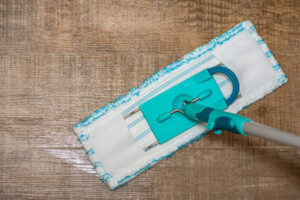
HOW TO CLEAN VINYL FLOORING
To clean vinyl flooring, you’ll need a mop and bucket and dry cloth. Before you start, it will be necessary to sweep and vacuum your vinyl flooring surface first to get rid of any dust, dirt, and debris. Next, fill your bucket with warm, not hot, water and add your favourite floor cleaning solution, and mix well with mop. Wring the mop head thoroughly to remove excess water and clean the flooring, working your way across and back and forth the room until the entire floor is covered. Repeat this process until the vinyl flooring is clean. To finish, it is important to use a dry cloth to mop up excess water from the floor to preserve the floor’s finish, then allow the floor to air dry.
TILED FLOORING
Tiled flooring can be a popular choice in the home. Tiles are low maintenance and good at accommodating spills and leaks when they occur. Homeowners tend to be impressed about the stain and water-resistant qualities of tiled flooring. However, this floor type can appear harsh and can be cold to walk on, particularly during the winter months. Tiles tend to exaggerate noise, giving zero ‘muffled’ effect to a room. They can also be prone to cracks and chips. Another bugbear to this flooring type is that their grout lines require a lot of attention to maintain and keep clean. Grout lines are often prone to dirt, stains, and mildew build-up given the amount of wear and tear they are exposed to.
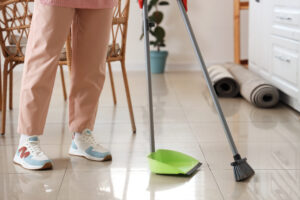
HOW TO CLEAN TILED FLOORING
To clean a tiled floor, start by emptying the room as much as possible to enable the floor to be cleaned throughout. Sweeping the tiles daily will prevent a buildup of dust, dirt, and debris. To clean deeper, use a string mop head and bucket, fill with hot water, and add a cap of tile cleaning solution. It’s important to include grouted areas in the cleaning process. These areas can be tackled by using an old toothbrush and a white vinegar solution and simply working from tile to tile and lightly scrubbing the grouted areas as you go to loosen and remove dirt and debris. To complete the cleaning process, buff the entire cleaned floor with microfiber cloths. This should keep your tiled flooring in pristine condition.
If you need more help with your daily household tasks, our dedicated cleaning services at Pressed not Stressed can take care of that. We offer local cleaning services in and around Chester-le-Street.